RBI Interventions Limit Rupee Fall; Dollar-Rupee Forward Premiums Decline
RBI Interventions Limit Rupee Fall; Dollar-Rupee Forward Premiums Decline
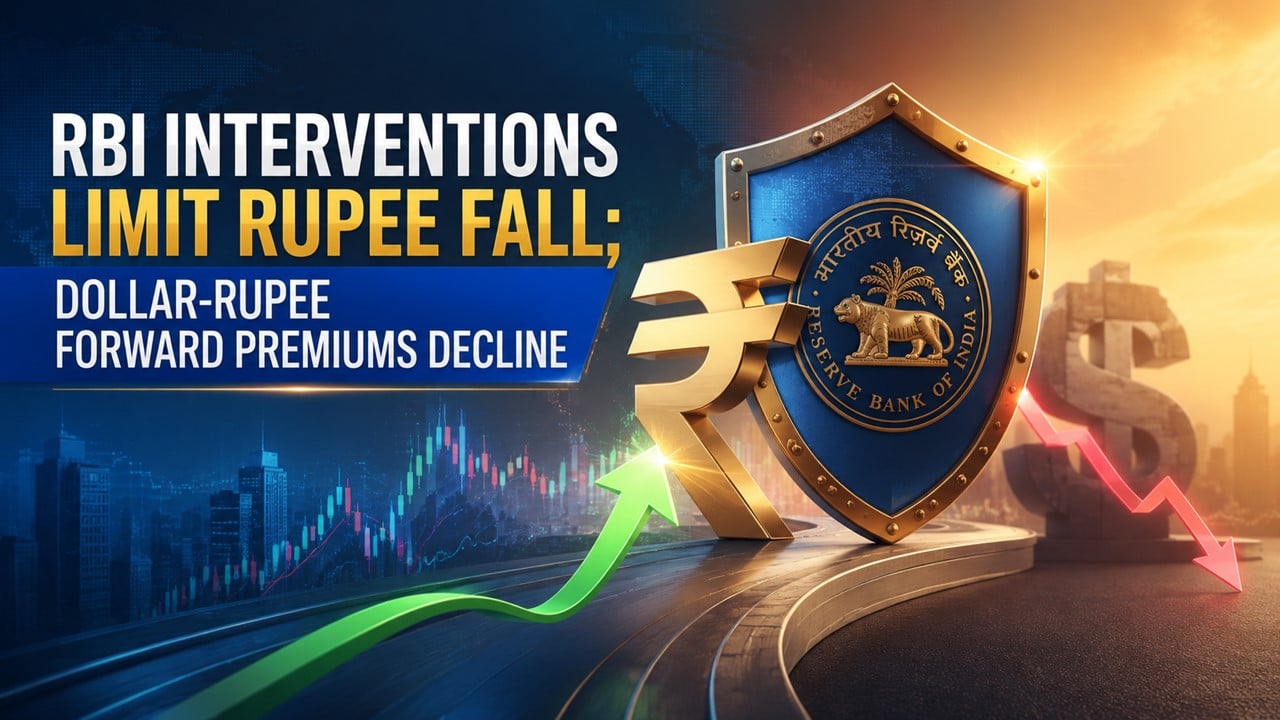
The Indian rupee weakened against the U.S. dollar on Tuesday despite continued intervention by the Reserve Bank of India (RBI), while dollar-rupee forward premiums declined amid the central bank’s active participation in the foreign exchange market.
The rupee settled at 95.2650 per U.S. dollar, down 0.3% from the previous close. Market participants indicated that the decline could have been steeper had the RBI not continued selling dollars in the spot market. The central bank has reportedly intervened in most trading sessions since the rupee touched a record low of 96.96 per dollar in mid-May.
Apart from spot market interventions, the RBI has also been conducting dollar-rupee buy/sell swaps to manage domestic liquidity and mitigate the impact of foreign exchange operations on its reserves. These swap operations contributed to a decline in forward premiums, with the one-year implied yield falling by 12 basis points to 3.03%.
Forward premiums represent the cost of hedging against future rupee depreciation. A decline in premiums generally indicates lower hedging costs for importers and market participants seeking protection against currency volatility.
Despite the RBI’s efforts, traders expect pressure on the rupee to continue in the near term due to persistent foreign portfolio outflows, weak capital inflows, and uncertainty surrounding geopolitical developments in the Middle East. Volatility in crude oil prices remains a key concern, given India’s dependence on imported energy.
Oil prices declined by more than 1% on Tuesday after U.S. President Donald Trump stated that discussions with Iran were continuing, easing some concerns over potential disruptions to global energy supplies. The comments contrasted with earlier reports suggesting that Tehran had suspended indirect negotiations with Washington.
The ongoing conflict in the region has complicated India’s economic outlook, creating concerns over higher imported inflation and slower economic growth. The situation has also increased pressure on the RBI as it balances inflation management with support for economic activity while attempting to curb excessive currency volatility.
Against this backdrop, economists largely expect the RBI to maintain the policy repo rate at 5.25% in its upcoming monetary policy meeting. Market participants believe the central bank will continue to follow its established approach of addressing inflation and growth through interest rate policy while using foreign exchange reserves and market interventions to manage currency fluctuations.